

A practical framework for comparing multi-location IT support: coverage, language, escalation, security and transition.
Start with the operating model
Define which users, sites, devices and applications need support. Separate routine service desk work from specialist infrastructure, security or application work. Record business hours, critical periods and the channels employees can use. A clear scope prevents a provider from treating every request as an undefined “all IT” responsibility.

Compare coverage and handoffs
Ask how requests are received in each location, what languages are available, and how work passes between first-line and specialist teams. A useful coverage map names time zones, service hours, out-of-hours ownership and escalation contacts. Test a realistic scenario, such as a user unable to access a business application, and trace it from intake to closure.
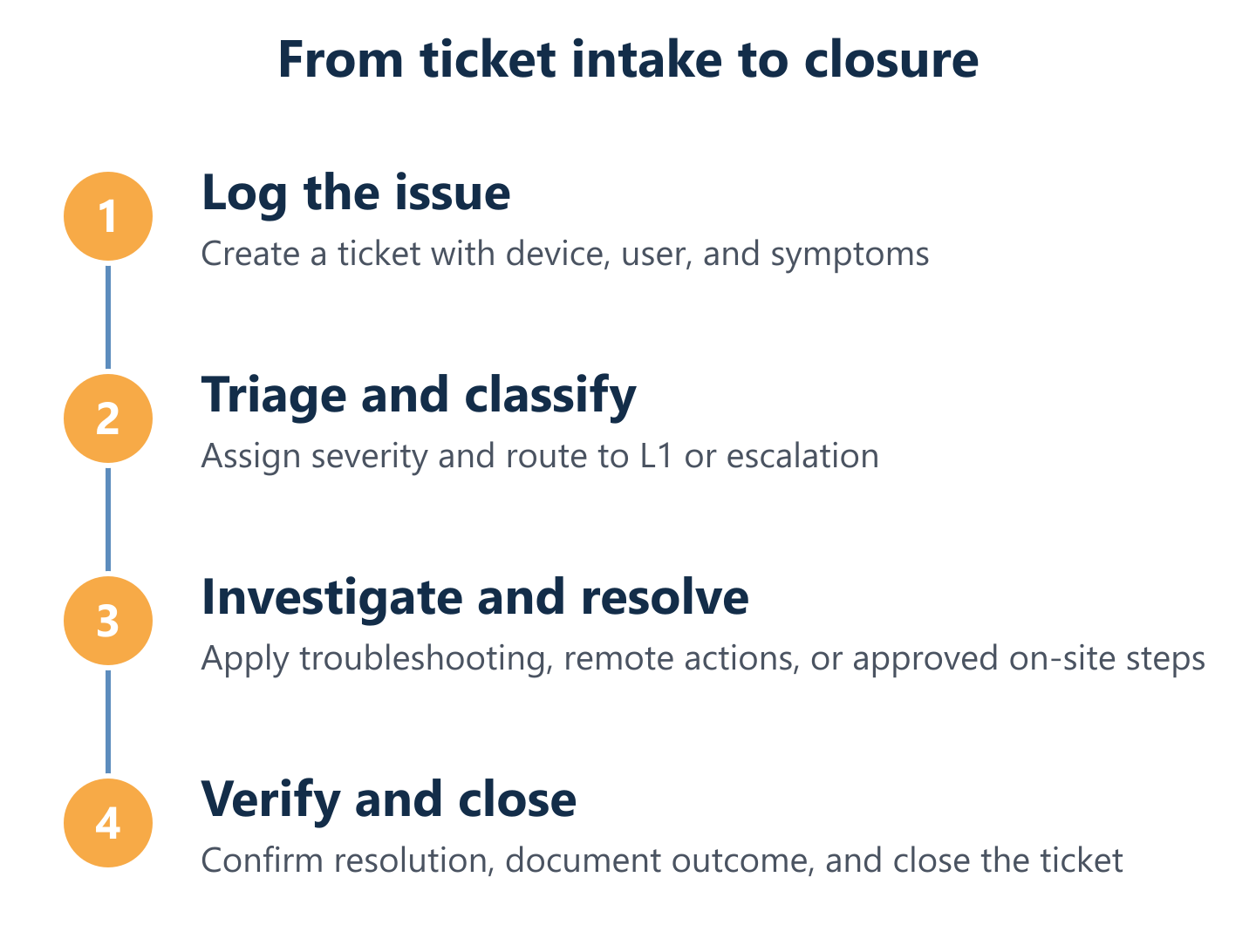
Check security and continuity
Review identity checks, least-privilege access, remote-support controls, data handling, backups and incident escalation. Ask who can approve privileged changes and how access is removed when work ends. For continuity, request documented ownership and a handover plan; do not infer resilience from a geographic claim alone.

Plan a controlled transition
Inventory users, endpoints, applications, dependencies and open issues. Agree knowledge-transfer owners, access prerequisites, acceptance criteria and a fallback route. Begin with a bounded pilot or clearly measured onboarding phase, then review unresolved items before expanding scope.