
How to design language-aware support intake, technical handoffs, knowledge resources and service-hour expectations.
Confirm language needs at intake
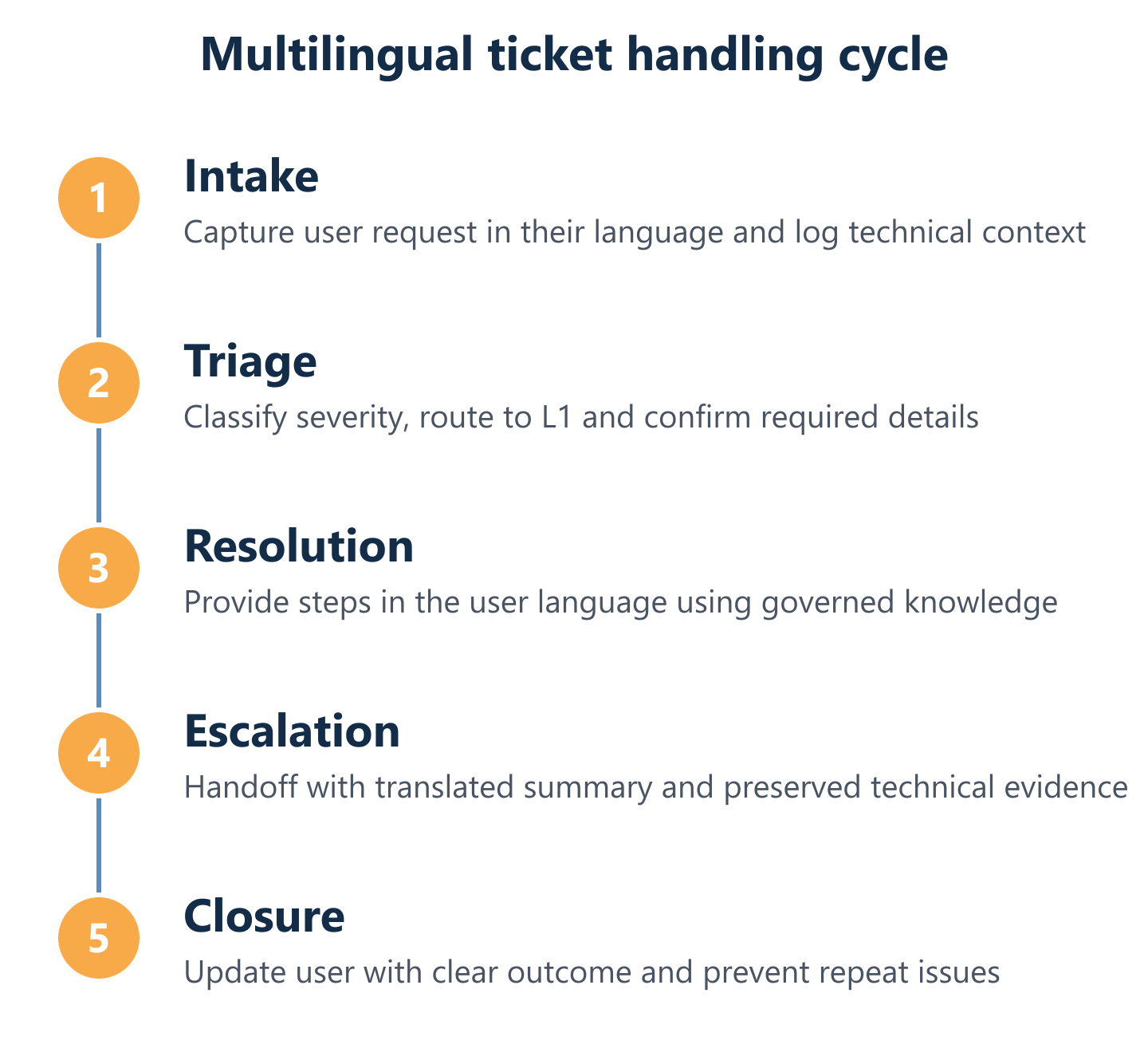
Ask which language the user prefers and whether the issue includes terminology that must remain unchanged, such as product names or exact error messages. A clear preference field helps route work without assuming that a location determines a person’s language. Keep the original wording alongside a concise summary when translation could alter technical meaning.

Preserve context across handoffs
A handoff should carry the user’s goal, business impact, steps already attempted, exact messages, affected assets and next owner. Use a shared vocabulary for priority and status, and confirm that translated summaries retain the technical facts. Avoid translating identifiers, commands or quoted errors in ways that make them unusable.
Build usable multilingual knowledge
Maintain a controlled glossary for recurring terms, product names and approved explanations. Keep articles short enough to scan, label their language and revision date, and identify an owner for updates. Test instructions with the audience that will use them; a literal translation can still be unclear or unsafe.

Set honest service expectations
Publish the languages actually supported, the applicable service hours, contact routes and escalation method. BlueNova currently confirms English and Spanish support on weekdays from 09:00 to 18:00 CET. Confirm any coverage outside those hours or in another language before relying on it; do not imply 24/7 availability.