
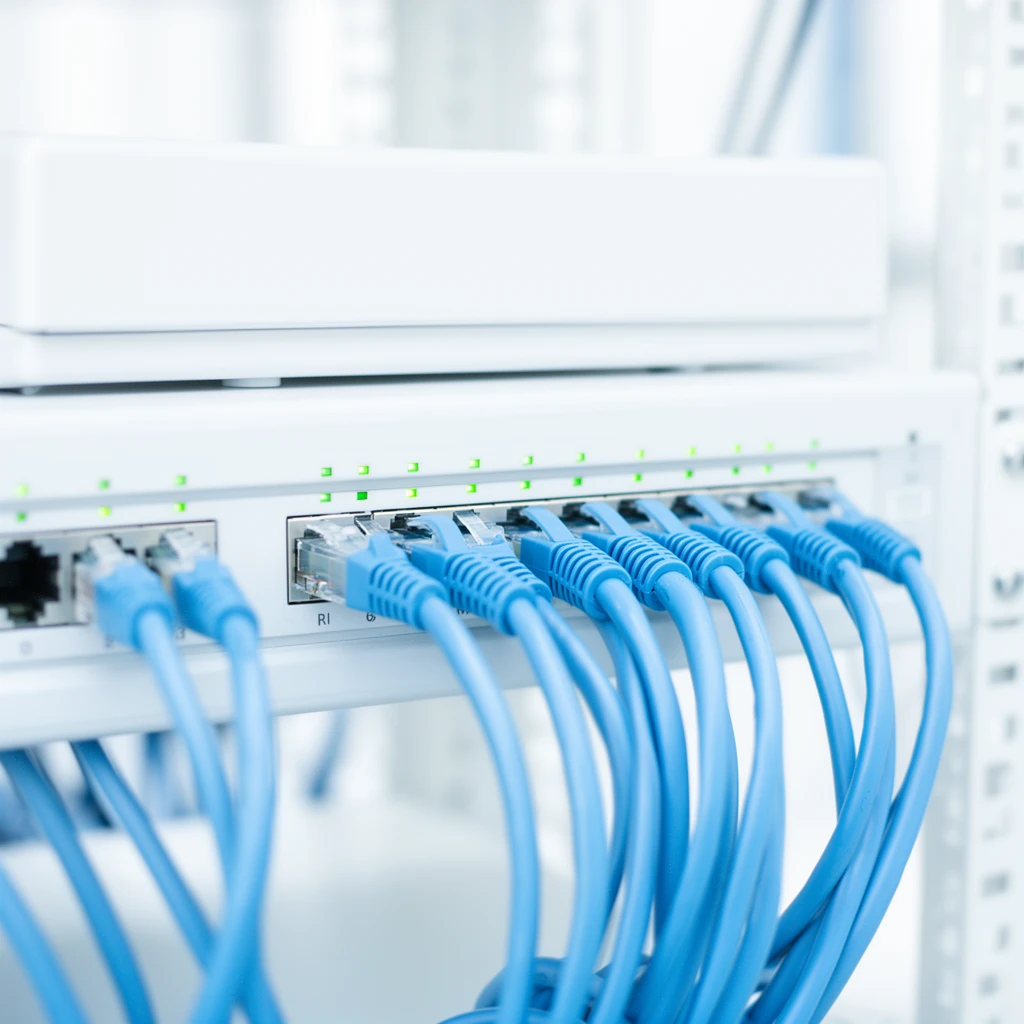
Network infrastructure connects people, devices, applications and sites. It includes physical cabling and fibre, switches, routers, wireless access points, network security controls and the systems used to monitor them. A well-planned environment supports daily work while giving an organisation a clear way to manage change and troubleshoot problems.
Network requirements vary with building layout, user numbers, cloud services, business applications and security needs. This guide explains common design and operating considerations. It is general information: the right configuration depends on a site survey and the organisation’s requirements.
What network infrastructure services can include
Network projects commonly cover assessment, design, implementation, validation and ongoing operations. An assessment records the current environment, constraints and business requirements. Design translates those findings into a proposed topology, equipment needs, addressing, segmentation and resilience approach. Implementation may include cabling, device configuration and integration with existing systems. Validation checks that the delivered environment meets agreed requirements, with documentation handed over to the responsible team.
Ongoing operations can include monitoring, configuration backups, planned firmware maintenance, incident handling and change control. These activities should be described in the service scope, including who performs each task and how issues are escalated.
Assessment and design
Start with an inventory of sites, network devices, cabling, internet links and critical applications. Record user density, wireless coverage needs, expected growth, dependencies and known trouble spots. Design decisions can then account for capacity, redundancy, security boundaries and manageability. A written design should identify assumptions and items that need confirmation before deployment.
Wired and wireless connectivity
Structured cabling provides connections between work areas, communications rooms and network equipment. Fibre may be suitable for longer runs or higher-capacity links, while copper cabling is common for endpoint connections. Wireless planning considers building materials, access-point placement, interference, roaming and expected device density. A post-installation survey can help verify coverage against the agreed requirements.
Implementation and validation
Deployment plans should define sequencing, maintenance windows, rollback steps and coordination with affected teams. After configuration, verify connectivity, segmentation, failover behaviour where included, wireless coverage and access to required services. Keep diagrams, asset details and configuration records current so future support does not depend on undocumented knowledge.
Components that shape the design
Routers connect networks and direct traffic; switches connect wired devices and can separate traffic using VLANs; wireless access points provide Wi-Fi connectivity. Firewalls and access controls enforce security policies. Network management tools collect status and performance information. Software-defined networking or SD-WAN may help manage policy across larger or distributed environments, but suitability depends on topology, applications and operational capability.
Security and segmentation
Security belongs in the design from the start. Use separate network zones where appropriate, limit administrative access, replace default credentials, maintain supported firmware and document firewall rules. Guest, corporate, operational and IoT devices may need different access policies. Review logs and alerts according to an agreed process, and confirm who owns investigation and response.
Monitoring and maintenance
Monitoring can track device availability, interface errors, link utilisation, latency and wireless health. Define thresholds and escalation responsibilities so alerts lead to useful action. Planned maintenance should include testing, backups, change records and a recovery plan. Review capacity and recurring incidents periodically; monitoring alone does not guarantee availability or prevent every fault.
How to compare network service providers
- Is assessment, design, installation, validation and ongoing support clearly scoped?
- Which sites and components are covered, and what is excluded?
- What are the support hours, escalation route and response commitments?
- How are changes, maintenance windows, backups and documentation handled?
- Which certifications or partner credentials are current and relevant?
- How are security responsibilities divided between provider and customer?
- Can references or case studies be verified for comparable work?
A useful next step is to document your sites, current equipment, connectivity issues and business requirements. BlueNova can discuss those requirements through the contact options on its website. Any proposed scope, service levels, locations and technologies should be confirmed directly before work begins.